


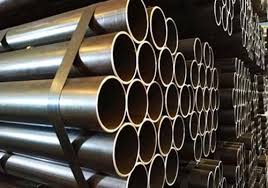
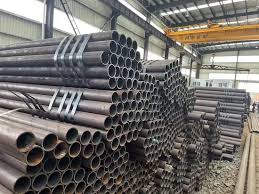
What is 20 Carbon Steel Boiler Steel Pipe?
"20 Carbon Steel" refers to a specific grade of low-carbon steel defined by its chemical composition, where the carbon content is approximately 0.20%.
"Boiler Steel Pipe" indicates that this pipe is manufactured to meet stringent standards for use in high-pressure and high-temperature applications, such as boilers, superheaters, and heat exchangers.
Therefore, ASTM A179 / A192 Grade 20 is the most common specification for this type of pipe. It is a seamless cold-drawn low-carbon steel tube specifically designed for heat exchanger and condenser services.
Key Characteristics & Properties
Low Carbon Content (~0.20%):
Excellent Weldability: It can be easily welded using all common methods without special precautions (like pre-heating or post-weld heat treatment), unlike higher carbon steels.
Good Ductility and Formability: It can be bent and formed without cracking.
Relatively Soft: Not as hard or strong as medium or high-carbon steels.
Seamless Construction:
The pipe is formed by piercing a solid billet of steel, creating a pipe without any welded seams. This is critical for high-pressure applications as it eliminates a potential weak point.
Cold-Drawn Process:
The pipes are cold-drawn to achieve precise dimensions (outer diameter and wall thickness), a smooth surface finish, and enhanced mechanical strength.
High-Temperature Performance:
It is designed to maintain its strength and resist oxidation (scaling) at elevated temperatures commonly found in boiler and pressure vessel service.
Common Specifications and Standards
Boiler pipes are governed by international standards to ensure safety and performance. The most relevant standards for Grade 20 carbon steel are:
ASTM A179 / A192: This is the primary standard for Seamless Cold-Drawn Low-Carbon Steel Heat-Exchanger and Condenser Tubes. A192 typically has slightly higher pressure requirements than A179.
ASME SA179 / SA192: Identical to the ASTM standards but are endorsed by the American Society of Mechanical Engineers for use in code-regulated construction (like the ASME Boiler and Pressure Vessel Code).
DIN 17175 / EN 10216-2: European standards that cover similar seamless tubes for pressure purposes. The equivalent grade would be something like P235GH (with different chemical composition limits, but similar application).
GB 3087: A Chinese standard for seamless steel tubes for boiler purposes. The equivalent grade is 20G ("G" stands for Gao Ya, meaning high pressure).
Chemical Composition (Typical for ASTM A179)
| Element | Content (%) |
|---|---|
| Carbon (C) | 0.06 - 0.18% (Max) |
| Manganese (Mn) | 0.27 - 0.63% |
| Phosphorus (P) | 0.048% Max |
| Sulfur (S) | 0.058% Max |
| Silicon (Si) | (Not specified, but typically low) |
*Note: The exact "20 Carbon" grade in other systems (like Chinese 20G) may have a carbon content closer to 0.17-0.24%.*
Mechanical Properties (Typical for ASTM A179)
| Property | Value |
|---|---|
| Tensile Strength | ≥ 325 MPa (47,000 psi) |
| Yield Strength | ≥ 180 MPa (26,000 psi) |
| Elongation | ≥ 35% |
Main Applications
This type of pipe is exclusively used in heat transfer and pressure-containing equipment:
Fire Tube Boilers: Where hot gases pass through the tubes, which are surrounded by water.
Water Tube Boilers: Where water passes through the tubes, which are heated by external gases.
Heat Exchangers: Transferring heat from one fluid to another.
Condensers: Converting steam back into water.
Superheaters: Heating steam to a very high temperature to increase thermal efficiency.
Economizers: Pre-heating feedwater using waste heat from flue gases.
Advantages and Disadvantages
Advantages:
Cost-Effective: Low-carbon steel is relatively inexpensive.
Easy to Fabricate and Weld: Simplifies manufacturing and on-site installation.
Good Thermal Conductivity: Efficient for heat transfer.
Adequate Strength for Service: Provides sufficient strength for many boiler and pressure applications.
Disadvantages:
Low Corrosion Resistance: Will rust if not protected from moisture; not suitable for corrosive fluids without treatment.
Lower Strength: Not suitable for extremely high-pressure or high-stress applications where alloy steels are required.
Important Considerations for Buyers and Users
Certification: Always ensure the material comes with a Mill Test Certificate (MTC) or Material Test Report (MTR) that verifies its chemical and mechanical properties comply with the ordered standard.
Non-Destructive Testing (NDT): Boiler tubes often undergo tests like hydrostatic testing (to check for leaks), eddy current testing, or ultrasonic testing to ensure integrity.
Dimensional Tolerances: Boiler tubes have strict tolerances on outer diameter (OD) and wall thickness (WT). Confirm these meet your design requirements.
In summary, 20 Carbon Steel Boiler Pipe (ASTM A179/A192) is a fundamental, reliable, and widely used material for heat exchange and pressure applications where high strength is not the primary requirement, but weldability, formability, and consistent performance at moderate temperatures are essential.


