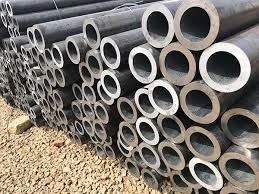
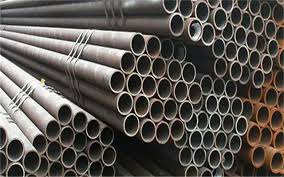
1. What is the difference between seamless steel pipes for boiler use and ordinary seamless steel pipes? Seamless steel pipes for boiler use (also known as boiler tubes) are specially designed for high-temperature and high-pressure environments in boilers, with stricter quality requirements than ordinary seamless steel pipes. They must have good high-temperature strength, creep resistance, oxidation resistance, and fatigue resistance, and their chemical composition and mechanical properties must meet strict standards (such as GB/T 3087 for low-pressure boiler tubes and GB/T 5310 for high-pressure boiler tubes). Ordinary seamless steel pipes (such as GB/T 8163) have lower requirements for high-temperature and high-pressure performance, mainly used for general fluid transportation and mechanical parts. Additionally, boiler tubes undergo more rigorous heat treatment and non-destructive testing to ensure safety in high-risk applications.
2. What is the ASTM A106 standard, and what are its common grades? ASTM A106 is a standard formulated by the American Society for Testing and Materials (ASTM) for carbon steel seamless pipes for high-temperature service. It specifies the technical requirements, dimensions, performance, and testing methods for seamless pipes used in boiler tubes, heat exchangers, and other high-temperature equipment. Common grades in ASTM A106 include Grade A, Grade B, and Grade C. Grade A has a minimum tensile strength of 485MPa and a minimum yield strength of 275MPa; Grade B has a minimum tensile strength of 515MPa and a minimum yield strength of 345MPa; Grade C has a minimum tensile strength of 585MPa and a minimum yield strength of 415MPa. These grades are widely used in the petroleum, chemical, and power industries in North America and other regions.
3. How does the diameter of seamless steel pipes affect their performance? The diameter of seamless steel pipes (outer diameter and inner diameter) directly affects their pressure-bearing capacity, flow rate, and structural stability. For pipes with the same wall thickness, a smaller outer diameter results in higher pressure-bearing capacity (because the stress on the pipe wall is inversely proportional to the diameter). A larger inner diameter increases the flow rate of the medium (e.g., fluid or gas) but reduces the pressure-bearing capacity. Additionally, the diameter also affects the pipe's rigidity: larger-diameter pipes are more prone to deformation under external forces, so they may require thicker walls or additional support. The choice of diameter depends on the application's flow requirements, working pressure, and installation space.
4. What is the application of seamless steel pipes in the automotive industry? In the automotive industry, seamless steel pipes are widely used in the manufacturing of key components due to their high strength, precision, and reliability. Common applications include: exhaust pipes (using corrosion-resistant alloy seamless pipes to withstand high temperatures and exhaust gas corrosion), drive shafts (using high-strength seamless pipes to transmit torque), fuel pipes (using seamless pipes with good sealing performance to transport fuel), and hydraulic pipes (using high-pressure seamless pipes to transmit hydraulic oil in the braking and suspension systems). Additionally, seamless steel pipes are also used in the manufacturing of engine parts (such as cylinder liners and connecting rods) to ensure the engine's stability and service life.
5. What is the chemical composition of 16Mn seamless steel pipe, and what are its advantages? 16Mn (also known as Q345) is a low-alloy high-strength seamless steel pipe grade. Its chemical composition is: carbon (C) 0.12-0.20%, manganese (Mn) 1.20-1.60%, silicon (Si) 0.20-0.60%, and a small amount of impurities (sulfur ≤0.045%, phosphorus ≤0.045%). The addition of manganese improves the steel's strength and toughness, making 16Mn seamless steel pipe have a tensile strength of 470-630MPa and a yield strength of ≥345MPa. Its main advantages include: high strength (10-20% higher than ordinary carbon steel pipes), good plasticity and weldability, and relatively low cost. It is widely used in medium-pressure pipelines, mechanical structures, and construction engineering (such as bridge supports and building frames).