


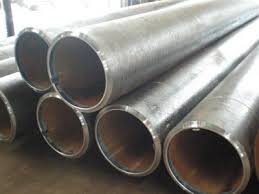

Introduction to 10CrMo9-10 Carbon Steel Boiler Pipe
10CrMo9-10 is a low-alloy heat-resistant steel widely used in the manufacturing of pressure vessels, boilers, and high-temperature piping systems. Its designation follows the European standard EN 10216-2. The numbers and letters in its name indicate its key alloying elements: approximately 1% Chromium (Cr) and 0.9-1.2% Molybdenum (Mo), with a carbon content around 0.10%.
The primary advantage of 10CrMo9-10 lies in its enhanced creep resistance and elevated temperature strength. The addition of molybdenum improves the steel's strength at high temperatures and reduces susceptibility to temper embrittlement. Chromium contributes to improved oxidation and corrosion resistance compared to plain carbon steels. This combination makes it particularly suitable for long-term service in environments with temperatures up to approximately 580°C (1076°F).
Typical Applications Include:
Superheater and reheater tubes in power station boilers
High-temperature headers and steam lines
Heat exchangers in process industries
Components in petrochemical plants
This steel is commonly supplied in normalized and tempered condition to achieve an optimal microstructure that balances strength, ductility, and toughness.
Key Characteristics and Properties of 10CrMo9-10
The table below summarizes the fundamental properties and specifications of 10CrMo9-10 steel pipe according to common standards.
Table: Summary of 10CrMo9-10 Boiler Steel Pipe
| Property Category | Details / Typical Value |
|---|---|
| Material Standard | EN 10216-2: Seamless steel tubes for pressure purposes |
| Equivalent Grades | ASTM/ASME: A335 P12, DIN: 13CrMo4-5, JIS: STBA 22, GB: 15CrMoG |
| Chemical Composition | C: 0.08-0.14%, Si: ≤0.35%, Mn: 0.40-0.80%, P: ≤0.025%, S: ≤0.015%, Cr: 2.00-2.50%, Mo: 0.90-1.20% |
| Mechanical Properties (at room temp) | Yield Strength (Rp0.2): ≥ 280 MPa, Tensile Strength (Rm): 460-590 MPa, Elongation (A): ≥ 22% |
| Heat Treatment | Normalized (at ~920-960°C) and Tempered (at ~680-730°C) |
| Maximum Service Temperature | ~580°C (1076°F) for long-term creep service |
| Key Advantages | Good weldability (with pre- and post-weld heat treatment), Excellent creep strength, Improved oxidation resistance compared to C-Mo steels |
| Main Applications | High-temperature piping and tubing in power generation, industrial boilers, and petrochemical plants. |
Important Notes for Application:
Welding: While it offers good weldability, proper procedures must be followed. Pre-heating (200-300°C) and post-weld heat treatment (PWHT) around 650-700°C are typically mandatory to prevent cold cracking and relieve residual stresses.
Corrosion Resistance: Although it has better oxidation resistance than carbon steel, it is not a stainless steel. For environments with significant wet corrosion or higher oxidation demands, higher alloy steels (e.g., containing more Cr) should be considered.
Standard Compliance: Always ensure the material is supplied with the appropriate certification (e.g., EN 10204 3.1/3.2) and meets the specific requirements of the design code (e.g., EN 12952, ASME BPVC).


