


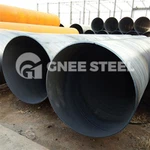


API 5L X70 PSL2 SSAW Pipe
Pipe End: Plain, Bevel End, Screwed, Threaded
Packing: Wooden Boxes, Plastic Bags, Steel Strips Bundled, or as per Customers Requests
API 5L X70 PSL2 SSAW Steel Pipe Description
API 5L X70 PSL2 pipe is a high-strength and high-toughness steel pipe material widely used in pipeline systems for industries such as petroleum, natural gas, chemical, and power. The yield strength of API 5L X70 PSL2 spiral welded pipe ranges from 485 MPa to 605 MPa, while its tensile strength ranges from 570 MPa to 760 MPa, with a maximum yield-to-tensile ratio of 0.93.
API 5L X70 PSL2 SSAW Pipe for Oil and Gas Specification
| Product | SSAW Steel Pipes |
| OD | 219mm(8")- 3520mm(138") |
| WT | 0.8-25.5mm |
| Length | 0.3-18m( customized) |
| Standard | API 5L PSL2 |
| Grade | X70 |
| Surface | Black painting, Varnish painting, bare pipe, Oiled,customized coating(3LPE/FBE/Concrete Weight Coating/Insulation Coatin/Bitumen Coating) |
| Package | Wooden Boxes, Plastic Bags, Steel Strips Bundled, or as per Customers Requests |
| Usage | Oil&gas Industry/ Construction/ piling/ mining Sewage Transmission Etc. |
API 5L X70 PSL2 SSAW Pipe


API 5L X70 PSL2 Spiral Pipe Inspection:
Visual Inspection: Surface inspection involves visually examining the weld joints. It is a simple and widely used method in final product inspection, primarily to detect defects and dimensional deviations on the weld seam surface. This inspection is generally conducted using the naked eye, aided by standard templates, measuring gauges, and magnifying glasses. Surface defects on the weld seam suggest potential internal defects.
Physical Methods Inspection: Physical inspection methods involve using physical phenomena for measurement or testing. Inspection of internal defects in materials or workpieces typically employs non-destructive testing methods such as ultrasonic testing, radiographic testing, dye penetrant testing, and magnetic particle testing.
Pressure Vessel Strength Test: In addition to seal testing, pressure vessels undergo strength tests. Common tests include hydrostatic testing and pneumatic testing. Both tests evaluate the weld seam integrity of vessels and pipelines under pressure. Pneumatic testing is more sensitive and faster than hydrostatic testing. After the test, products do not require drainage, making it particularly suitable for products where drainage is difficult. However, pneumatic testing carries greater risks, requiring adherence to appropriate safety measures during the testing process to prevent accidents.
Leak Tightness Test: Welded containers storing liquids or gases undergo leak tightness testing to detect non-tightness defects in the weld seam, such as penetrating cracks, gas pockets, slag inclusions, incomplete penetration, and porous structures. Methods for leak tightness testing include kerosene testing, water-filled testing, and water jet testing.
Hydrostatic Test: Each steel pipe should undergo a hydrostatic test without leakage. The test pressure is calculated according to the formula P=2ST/D, where S is the test stress in MPa. The test stress for hydrostatic testing is selected at 60% of the minimum yield strength as specified in the corresponding steel strip standard (e.g., Q235 is 235 MPa). The stabilization time during the test should be at least 5 seconds for D<508 and at least 10 seconds for D≥508.
Non-Destructive Testing: Weld seams, strip-to-head welds, and circumferential seams of steel pipes should undergo X-ray or ultrasonic testing for repair welding. For spiral welds used for flammable fluids transport, 100% SX-ray or ultrasonic testing is required. For steel pipes used for water, sewage, air, heating steam, and other ordinary fluid transport, spiral welds should undergo random X-ray or ultrasonic testing (20%).

Hot Tags: api 5l x70 psl2 ssaw pipe, China api 5l x70 psl2 ssaw pipe manufacturers, suppliers, rectangular tubes, SY T5037 standard spiral steel pipe, A530 welded pipe, steel pipelines, ASTM A252 steel pipe, Spiral Submerged Arc Welded Pipe
You Might Also Like

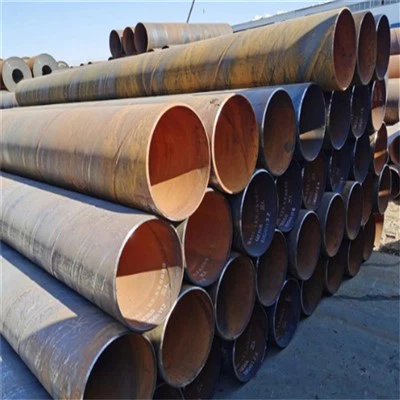


Send Inquiry