


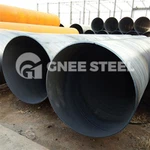


API 5L X60 ERW Carbon Steel Pipe
Type: ERW/Welded
Delivery time: 5 days
API 5L X60 ERW Pipe Description
API 5L X60 welded pipe is a high-strength carbon steel pipe that meets the American Petroleum Institute (API) standards and has greater strength compared to API 5L X56. It has a minimum yield strength of 415 MPa and a minimum tensile strength of 520 MPa, with a yield ratio of 0.93. API 5L X60 resistance welded pipe is widely used in oil and gas transmission pipelines, oil well casings, drill pipes, drill collars, and refining and chemical plants.
API 5L X60 ERW Pipe Specification
| Product Name | API 5L X60 ERW Pipe |
| Diameter | 1inch – 26inch |
| Wall Thickness | SCH10, SCH 20, SCH 30, STD, SCH 40, SCH60 etc |
| Length | Random, length from 3m to 18m |
| Application | Line pipe, fluid pipe, water pipe, structure steel tube,piling tube, |
| Pipe Coating | Black painting, varnish paint, anti rust oil, or other coating required |
| Package | Plastic caps on both ends, Steel bundle, or acc. to customers' request |
| Inspection | ISO9001, SGS |
| Capacity | 10000 metric tons per month |
| Delivery time | 30 days |
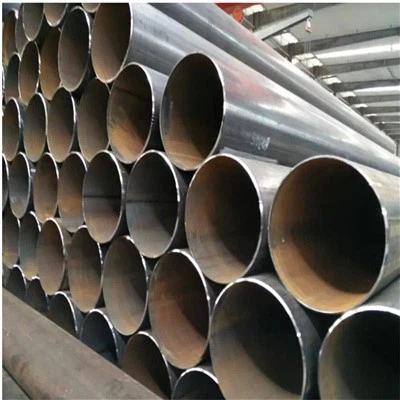
API 5L X60 ERW Steel Pipe


Factors Affecting the Quality of API 5L X60 Welded Pipe
Impact of Welding Speed on Welding Quality
Increased Welding Speed: When the welding speed is increased, the formation of oxide inclusions can be reduced, and the heat-affected zone is shortened, which helps in extruding the oxide layer from the molten groove.
Decreased Welding Speed: Conversely, when the welding speed is very low, the heat-affected zone becomes wider, larger welding burrs are produced, the oxide layer thickens, and the weld quality deteriorates.
General Rule: Generally, the higher the welding speed, the better the welding quality, as it can reduce the occurrence of welding spatter. However, for the production of thick-walled pipes, the welding speed should be appropriately controlled to increase the heating time and ensure sufficient welding fusion heat.
Impact of Steel Strip Edge Condition on Welding Quality
The condition and shape of the steel strip edges are also important factors affecting the quality of high-frequency welding.
Uneven or Irregular Edges: If the edges of the steel strip to be welded are uneven or irregular, the welding efficiency will be greatly reduced. Uneven or burred edges can cause premature contact and arcing of the welding surface, leading to short circuits. On one hand, the current density in the first half of the V-shaped angle increases and heats rapidly, which will be heated and extruded before forming the weld seam, consuming a lot of energy; on the other hand, the current density in the second half decreases significantly, and the base material cannot be heated to the welding temperature during the extrusion process, leading to cold welding.
Common Defects:
Scimitar Bend: This can cause the steel strip to deviate or reverse, causing the weld seam to shift, and more severely, causing overlap welding and resulting in disqualification.
Wavy Edges: This can easily cause cracks and fractures during welding.
Edge Nicks: The jagged, uneven edges caused by dull slitting machine disc blades lead to local "meat loss" in the steel strip, making it prone to cracks or fractures during welding and affecting the quality of the weld seam.
Therefore, the edges of the tube blank to be welded should be as flat as possible, maintaining an I-shaped weld to ensure that the proximity effect and temperature of the inner and outer surfaces are consistent, thereby improving the welding quality.
Hot Tags: api 5l x60 erw carbon steel pipe, China api 5l x60 erw carbon steel pipe manufacturers, suppliers, ASTM A335 pipes, Welded Structural Hollow Sections, ASTM A334 GR 6 pipe, welded square steel tubes, API 5L X52 X56 ERW Pipe, 3PE anticorrosion coating
Previous
API 5L X65 ERW Steel PipeYou Might Also Like


Send Inquiry