


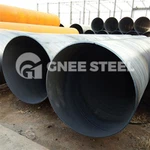


API 5L X70 Line Pipes For Oil & Gas
API 5L X70 pipeline is a high-strength line pipe steel conforming to the American Petroleum Institute (API) SPEC 5L standard, belonging to the high-grade (X70) category with a minimum yield strength of 485 MPa (70,300 psi). It is widely used in long-distance, high-pressure transmission systems for oil, natural gas, and other energy resources.
The pipe is available in two quality levels: PSL1 and PSL2, with PSL2 designed for more severe service conditions such as low temperatures, sour (H₂S-containing) environments, or seismically active zones. In European standards, the X70 grade is commonly referred to as L485, and it has become one of the mainstream material choices for onshore and offshore oil and gas trunk lines.
Have you found the right materials for polar and deep-sea pipeline engineering? API 5L X70 pipeline steel, -20 ℃ impact energy ≥ 40J, excellent low-temperature toughness, free access to engineering cases!
API 5L X70 Pipe Specifications Table
| Item | Parameter |
|---|---|
| Standard | API SPEC 5L (46th Edition) |
| Grade | X70 (L485) |
| Product Specification Level | PSL1 / PSL2 |
| Minimum Yield Strength | 485 MPa (70,300 psi) |
| Minimum Tensile Strength | ≥ 570 MPa |
| Yield-to-Tensile Ratio (Y/T) | ≤ 0.93 (required for PSL2) |
| Impact Toughness | Charpy V-notch test at -20°C: average ≥40 J (PSL1), ≥80 J (PSL2) |
| Non-Destructive Testing | PSL1: Sampling UT/RT; PSL2: 100% UT + 100% RT |
| Applicable Environments | Onshore/Offshore/Sour Service/Low Temperature/High Pressure |
| Connection Methods | Butt welding, coupling connection, spigot-and-socket joint |
API 5L X70 Mechanical Properties Table
| Property | PSL1 Requirement | PSL2 Requirement |
|---|---|---|
| Minimum Yield Strength (Rt₀.₅) | 485 MPa | 485 MPa |
| Maximum Yield Strength | No upper limit | No upper limit (but Y/T ≤ 0.93) |
| Minimum Tensile Strength (Rm) | ≥ 570 MPa | ≥ 570 MPa |
| Yield-to-Tensile Ratio (Rt₀.₅/Rm) | Not specified | ≤ 0.93 |
| Elongation (A₅₀mm) | ≥ 18% | ≥ 18% |
| Charpy Impact Energy (-20°C) | Average ≥ 40 J | Average ≥ 80 J, individual ≥ 60 J |
| Hardness (for sour service) | Not required | ≤ 22 HRC (per Appendix H) |
API 5L X70 Pipe Dimensions (Seamless & Welded) Table
| Type | Outer Diameter Range (mm) | Wall Thickness Range (mm) | Common Applications |
|---|---|---|---|
| Seamless Pipe (SMLS) | 8 - 630 | 1 - 200 | High-pressure branch lines, urban gas distribution, wellhead connections |
| Welded Pipe (Welded) | 219 - 1240 | 6 - 40 | Long-distance trunk lines, offshore platforms, large-diameter networks |
API 5L X70 Equivalent Table (Equivalent Grades)
| Standard | Grade | Notes |
|---|---|---|
| ISO 3183 | L485 | Internationally recognized equivalent to X70 |
| GB/T 9711 | L485 | Chinese national standard counterpart |
| EN 10208-2 | S485 | European standard line pipe grade |
| JIS G 3444 | STK500 | Japanese standard approximate grade (not fully equivalent) |
| ASTM A53 | Not applicable | Only for low-strength piping applications |
API 5L X70 Manufacturing Types
| Type | Process Description | Application Scenarios |
|---|---|---|
| Seamless Pipe (SMLS) | Formed by hot rolling or cold drawing without any weld seam, offering uniform strength | High-pressure, high-temperature, and critical applications such as wellhead connections and urban gas mains |
| Welded Pipe (Welded) | Made by forming steel plate or strip and welding the seam. Common processes include: • ERW (Electric Resistance Welding) • LSAW (Longitudinal Submerged Arc Welding) • SSAW/DSAW (Spiral/Dual Submerged Arc Welding) |
Large-diameter, long-distance trunk pipelines; cost-effective and suitable for mass production |
API 5L X70 Features
High Strength and Toughness: Yield strength exceeds 485 MPa, providing excellent resistance to deformation.
Low-Alloy Design: Microalloying elements such as niobium (Nb), vanadium (V), and titanium (Ti) refine grain structure and enhance performance.
Good Weldability: Carbon equivalent (Ceq) controlled below 0.38%, ensuring reliable field welding.
Corrosion Resistance: Suitable for sour service environments (H₂S), with resistance to hydrogen-induced cracking (HIC) and sulfide stress corrosion cracking (SSCC).
Excellent Low-Temperature Toughness: Charpy impact energy ≥40 J at -20°C, suitable for cold regions.
High Dimensional Accuracy: Outer diameter tolerance ±0.75%, wall thickness tolerance -8% to +19%.
API 5L X70 Advantages
Reduced Wall Thickness, Material Savings: Compared to X60/X65, X70 allows thinner walls under the same pressure, reducing steel usage and lowering transportation and installation costs.
Increased Transportation Efficiency: Higher strength enables higher operating pressures, increasing pipeline throughput.
Enhanced Safety: PSL2 grade offers superior strain capacity, making it ideal for complex geological conditions like earthquake zones or landslide-prone areas.
Lower Lifecycle Cost: Although unit price is slightly higher, the high strength and low maintenance result in better long-term cost efficiency.
Environmentally Friendly & Sustainable: Advanced TMCP (Thermo-Mechanical Control Process) reduces reliance on expensive alloys like Mo and Ni, enabling "lightweight" production.
Tests Referred API 5L X70 Pipe (Key Testing Items)
Hydrostatic Test: Conducted on every pipe; test pressure not less than 1.25 times design pressure.
Non-Destructive Testing (NDT):
Ultrasonic Testing (UT): Full-body inspection for internal defects
Radiographic Testing (RT): Weld seam inspection for cracks, porosity, etc.
Mechanical Performance Tests:
Tensile Test
Charpy Impact Test
Drop Weight Tear Test (DWTT) - used to evaluate fracture toughness
Chemical Composition Analysis: Direct reading spectrometer to detect C, Mn, S, P, Nb, V, Ti, etc.
Corrosion Resistance Tests:
HIC Test (NACE TM0284)
SSC Test (NACE TM0177) - applicable for sour service environments
Dimensional and Morphological Inspection: Laser diameter measurement, ultrasonic thickness measurement, ovality detection, etc.

API 5L X70 Oil and gas pipe lines Factory

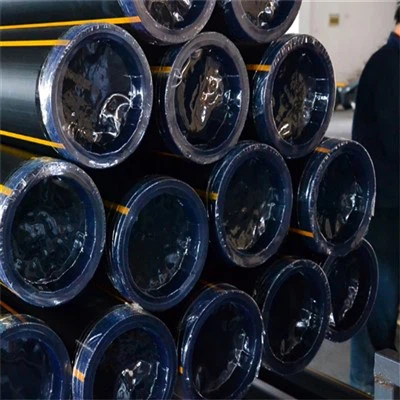
API 5L Carbon Steel Line Pipe Packaging and Shipping

FAQ
What is the difference between X65 and X70 pipe?
X70 has a minimum yield strength of 485MPa, which is about 7.8% higher than X65 (450MPa), making it more suitable for high-pressure large-diameter long-distance pipelines; X65 is mostly used for conventional high-pressure oil and gas transportation, while X70 focuses on harsh working conditions such as high cold, deep sea, sulfur-containing or seismic zones, such as the China Russia East Gas Pipeline; In terms of economy, although the unit price of X70 is slightly higher, it can save about 80 tons of steel per kilometer by reducing the thickness of the wall, and the comprehensive transportation and installation costs are lower; In terms of process requirements, X70 under PSL2 level has stricter control over low-temperature impact toughness (-20 ℃ summer specific work ≥ 80J) and carbon equivalent, and higher welding difficulty.
What is API 5L X70 equivalent ASTM?
API 5L X70 and ASTM A672 CC70 are both high-strength carbon steel pipeline materials with a minimum yield strength of 485 MPa, but they belong to different standard systems and are suitable for different working conditions, and cannot be directly interchanged.
Hot Tags: api 5l x70 line pipes for oil & gas, China api 5l x70 line pipes for oil & gas manufacturers, suppliers, 316 Stainless Steel Welded Pipe
Previous
API 5L X70 PSL2 Line PipeYou Might Also Like


Send Inquiry