




API 5L X60 3LPE Coated CRA Lined Pipe
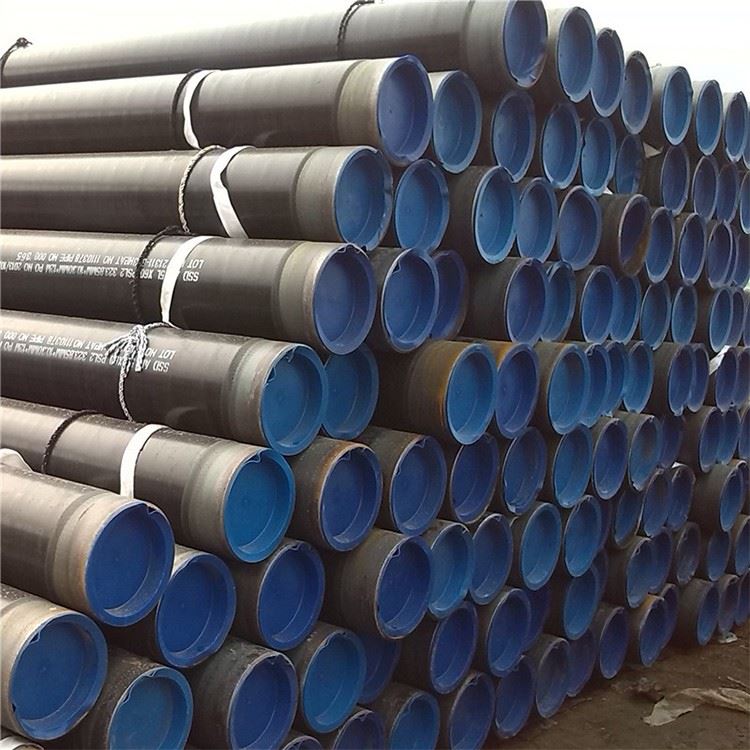
API 5L X60 3LPE Pre-Coated CRA Lined Pipe is a high-end bimetallic composite piping solution that integrates high structural strength with extreme internal and external corrosion protection. It is specifically engineered for transporting highly corrosive media-such as those containing high levels of H2S,CO2, or chloride ions-in demanding environments like deep-sea oilfields and sour service wells.
The pipe's construction consists of three critical layers:
High-Strength Base Pipe: Utilizing API 5L X60 grade carbon steel, it provides a minimum yield strength of 415 MPa (60,200 psi), ensuring the structural integrity required for high-pressure transmission.
Internal CRA Liner: The interior is lined with a Corrosion Resistant Alloy (CRA), such as 316L stainless steel, Duplex steel, or Inconel 625. With a typical thickness of 0.5mm to 3.0mm, this liner is bonded to the base pipe through mechanical expansion or metallurgical bonding, offering premium chemical resistance at a fraction of the cost of a solid alloy pipe.
External 3LPE Coating: The exterior is shielded by a Three-Layer Polyethylene (3LPE) system-comprising a Fusion Bonded Epoxy (FBE) primer, a copolymer adhesive, and a polyethylene top layer-totaling 2.5mm to 3.5mm in thickness. This provides superior resistance to mechanical damage and electrochemical corrosion in buried or subsea applications.
API 5l X60 Oil and gas transmission pipe Equivalent
| API 5L | Specification for line pipe | |
|---|---|---|
| Material Grade | PSL1 | L415 or x60 |
| Material Grade | PSL2 | L415N or X60N L415Q or X60Q L415M or X60M |
API 5L X60 oil and gas pipelines Chemical Composition
| Grades | C | Si | Mn | P | S | V |
| X60 PSL1(Seamless) | 0.28 | 0.45 | 1.40e | 0.3 | 0.3 | f |
| X60 PSL1(Welded) | 0.26 | 0.45 | 1.40e | 0.3 | 0.3 | f |
| X60Q PSL2 | 0.18 | 0.45 | 1.7 | 0.025 | 0.015 | g |
| X60N PSL2 | 0.24 | 0.45 | 1.4 | 0.025 | 0.015 | 0.1 |
API 5L X60 pipeline for oil and gas Mechanical Property
| Grades | Yield Strength, psi | Tensile Strength, psi | Elongation, in 2in |
| API 5L X60 PSL1 | 60 200 | 75 400 | c |
| API 5L X60 PSL2 | 60 200 | 81 900 | f |
API 5L X60 Line Pipe Dimensions in Inches
| NB | DN | OD (inches) | API 5L X60 Pipe Schedule | ||||||||||
|---|---|---|---|---|---|---|---|---|---|---|---|---|---|
| SCH 5 | SCH 10 | SCH 20 |
SCH 30 | SCH 40 | SCH 60 | SCH 80 | SCH 100 | SCH 120 | SCH 160 | ||||
| 3/4" | 20 | 1.05 | 0.065 | 0.11 | x | 0.095 | 0.113 | x | x | 0.17 | x | 0.219 | |
| 1" | 25 | 1.315 | 0.065 | 0.11 | x | 0.114 | 0.133 | x | x | 0.2 | x | 0.25 | |
| 1.1/2" | 40 | 1.9 | 0.065 | 0.11 | x | 0.125 | 0.145 | x | x | 0.225 | x | 0.281 | |
| 2" | 50 | 2.375 | 0.065 | 0.12 | x | x | 0.154 | x | x | 0.25 | x | 0.344 | |
| 2.1/2" | 65 | 2.875 | 0.083 | 0.12 | x | x | 0.203 | x | x | 0.3 | x | 0.375 | |
| 3" | 80 | 3.5 | 0.083 | 0.12 | x | x | 0.216 | x | x | 0.35 | x | 0.438 | |
| 4" | 100 | 4.5 | 0.083 | 0.12 | x | x | 0.237 | x | x | 0.437 | x | 0.531 | |
| 5" | 125 | 5.563 | 0.109 | 0.12 | x | x | 0.258 | x | x | 0.5 | x | 0.625 | |
| 6" | 150 | 6.625 | 0.109 | 0.13 | x | x | 0.28 | x | x | 0.562 | x | 0.719 | |
| 8" | 200 | 8.625 | 0.109 | 0.15 | 0.25 | 0.277 | 0.322 | 0.406 | 0.593 | 0.718 | 0.812 | 0.906 | |
| 10" | 250 | 10.75 | 0.134 | 0.17 | 0.25 | 0.307 | 0.365 | 0.5 | 0.718 | 0.843 | 1.0 | 1.125 | |
| 12" | 300 | 12.75 | 0.165 | 0.18 | 0.25 | 0.33 | 0.406 | 0.5 | 0.843 | 1.0 | 1.125 | 1.312 | |
3LPE External Coating
The external 3LPE (three-layer polyethylene) system is the global standard for buried and subsea pipeline corrosion protection. It is applied as one continuous operation after surface preparation (grit blast to Sa 2½ per ISO 8501-1):
Layer 1 - FBE primer: Fusion-bonded epoxy powder, 80–120 µm, gives chemical bonding to the steel and the primary corrosion barrier.
Layer 2 - Copolymer adhesive: 150–250 µm, bonds the FBE to the polyethylene topcoat.
Layer 3 - PE topcoat: high-density polyethylene, providing mechanical protection against impact, abrasion and backfill damage.
Standards referenced: DIN 30670 (Europe) and ISO 21809-1 (international); regional equivalents include CSA Z245.21 (Canada) and GB/T 23257 (China). Continuous service temperature is typically −40 °C to +80 °C. Cathodic-disbondment resistance is verified to ASTM G8 / G42, and peel strength at 20 °C and 50 °C to DIN 30670.
| Outside diameter (DN) | Normal level (mm) | Reinforced level (mm) |
|---|---|---|
| DN ≤ 100 | 1.8 | 2.5 |
| 100 < DN ≤ 250 | 2.0 | 2.7 |
| 250 < DN < 500 | 2.2 | 2.9 |
| 500 ≤ DN < 800 | 2.5 | 3.2 |
| DN ≥ 800 | 3.0 | 3.7 |
CRA Internal Liner
The CRA liner protects the wetted surface from CO2 corrosion, chloride pitting and sour (H2S) attack. It is supplied to API 5LD (Specification for Clad and Lined Steel Pipe) and bonded to the X60 base pipe by mechanical expansion (interference-fit gripping) or, for higher integrity, metallurgical (explosive or hydrostatic) bonding.
| Liner alloy | UNS | Typical use | Max service temp. |
|---|---|---|---|
| 316L stainless steel | S31603 | General wet CO2 / mild chloride | ≈ 60 °C |
| 2205 Duplex | S31803 / S32205 | Higher strength, chloride-bearing sour | ≈ 90 °C |
| 825 (Incoloy) | N08825 | Moderate sour / acidic | ≈ 200 °C |
| 625 (Inconel) | N06625 | Severe sour / high chloride | ≈ 300 °C |
Liner thickness is typically 0.5 mm to 3.0 mm, selected from the corrosion allowance and the required design life. Because the liner is a separate alloy, its grade is verified by Positive Material Identification (PMI) before and after bonding.
API 5L X60 3LPE Pre-Coated CRA Lined Pipe Test Methods
Base Pipe & Material Testing (API 5L X60)
These tests ensure the carbon steel "skeleton" can handle high-pressure loads.
| Test Item | Standard | Description |
| Chemical Analysis | API 5L | Verifies C, Mn, P, S, and micro-alloying elements to ensure X60 grade compliance. |
| Mechanical Tensile Test | API 5L | Verifies Yield Strength (min 415 MPa) and Tensile Strength (min 520 MPa). |
| Charpy V-Notch Impact | API 5L | Tests the toughness of the X60 steel, especially at low temperatures. |
| Guided Bend Test | API 5L | Ensures the weld of the base pipe is ductile and free of defects. |
CRA Liner & Bonding Testing (API 5LD)
Since the liner is a separate alloy (e.g., 316L or Inconel), the bond between the two metals is critical.
| Test Item | Standard | Description |
| Bond Strength (Gripping) | API 5LD | Critical: Measures the mechanical gripping force between the liner and base pipe (usually via a pull-off or hydraulic test). |
| PMI (Positive Material Identification) | - | Handheld XRF/OES analysis to verify the alloy grade (e.g., 316L or 625) of the liner. |
| Dye Penetrant (PT) | ASTM E165 | Performed on the ends (seal welds) to detect any surface cracks in the CRA layer. |
| Liner Thickness Check | Ultrasonic | Ensures the CRA liner maintains its specified thickness (e.g., 2.0mm) throughout the pipe. |
External Coating Testing (3LPE - DIN 30670)
This ensures the buried or subsea exterior is protected from corrosion.
| Test Item | Standard | Description |
| Peel Strength Test | DIN 30670 | Measures the adhesion between the 3LPE layers and the steel pipe at 20°C and 50°C. |
| Holiday Detection | - | An electric spark test (typically 25kV) to detect "holidays" (pinholes or gaps) in the coating. |
| Cathodic Disbondment (CD) | ASTM G8 / G42 | Checks the coating's resistance to peeling when subjected to electrical protection currents. |
| Impact & Indentation | DIN 30670 | Ensures the PE layer is tough enough to withstand rocks and handling during installation. |
Comprehensive Non-Destructive Testing (NDT)
These tests check the integrity of the completed composite structure.
| Test Type | Method | Purpose |
| Hydrostatic Test | API 5L/5LD | Every pipe is filled with water at high pressure (e.g., 90% of yield) to ensure no leaks and a stable bond. |
| Ultrasonic Testing (UT) | Automated UT | Scans 100% of the pipe for delamination between the CRA liner and the base pipe. |
| Radiographic Testing (RT) | X-Ray | Used primarily on the girth welds or seal welds of the CRA liner to ensure no internal porosity. |
| Drift Test | Mandrel Pass | Ensures the internal diameter is consistent and that the liner hasn't collapsed or buckled. |
Specialized Corrosion Testing (Sour Service)
If the pipe is intended for H2S environments:
HIC (Hydrogen Induced Cracking): Tests the resistance of the X60 steel to hydrogen bubbling.
SSCC (Sulfide Stress Corrosion Cracking): Ensures the CRA liner and welds won't crack under stress in the presence of H2S.
Applications
Long-distance onshore and subsea oil and gas transmission pipelines where external soil corrosion and internal wet CO2/H2S attack occur together.
Sour-service fields and high-chloride environments (offshore, saline formations) where carbon steel alone would fail prematurely.
Water-injection and produced-water lines requiring both external and internal corrosion protection in a single pipe.
Retrofit and tie-in projects where a solid alloy pipe is economically unjustified but a carbon-steel-only pipe is technically inadequate.
GNEE API 5L X60 Line pipe factory

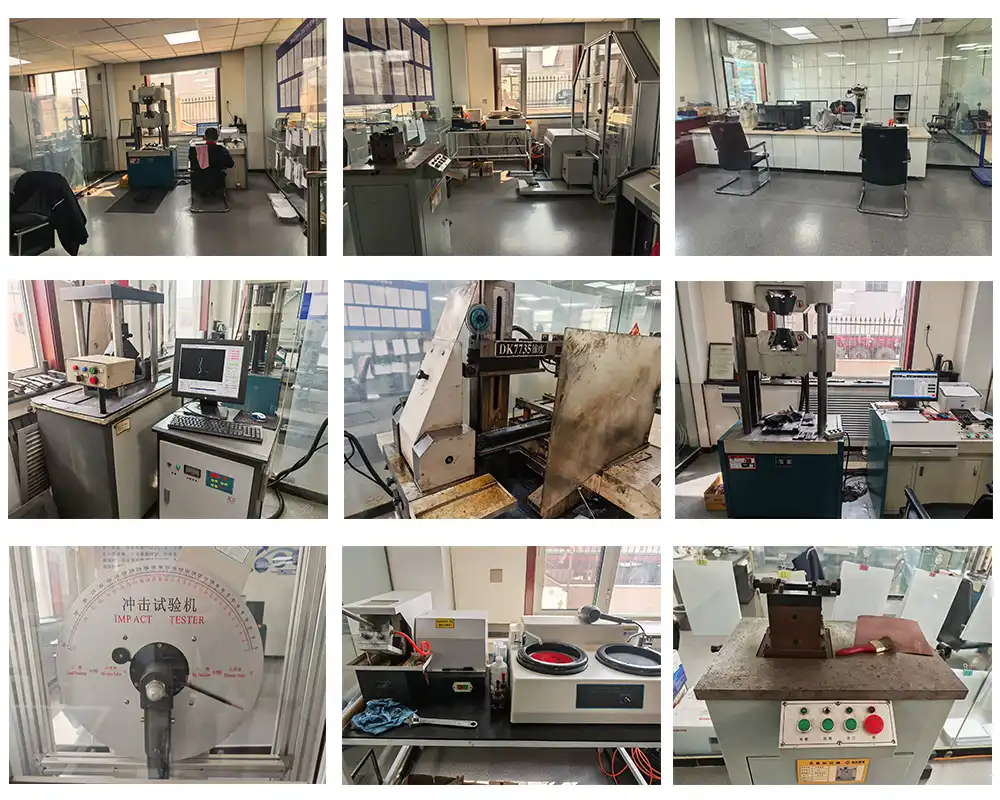
GNEE API 5L X60 Oil and gas transportation pipe test equipments
GNEE API 5L X60 ERW carbon steel pipe Certificate

Send Your API 5L X60 3LPE CRA Lined Pipe Requirement
Send the base grade and delivery condition, dimensions, liner alloy and thickness, 3LPE level, service condition and required certificates. We will confirm availability, the inspection basis and the delivery schedule, and return a quotation with the mill test certificate basis stated.
FAQ
What is CRA in pipe?
CRA stands for Corrosion Resistant Alloy.
In the piping industry, it refers to a group of high-performance materials (such as Stainless Steel, Duplex Steel, or Nickel Alloys like Inconel) that are used to protect pipes from harsh chemical environments.
What is the difference between API 5L X60 and X65?
The main difference is strength. X65 is a higher-strength grade than X60.
Yield Strength:
X60: Min 60,200 psi (415 MPa)
X65: Min 65,300 psi (450 MPa)
Tensile Strength:
X60: Min 75,400 psi (520 MPa)
X65: Min 77,600 psi (535 MPa)
Is API 5L X60 carbon steel?
Yes, API 5L X60 is a carbon steel.
Specifically, it is classified as a High-Strength Low-Alloy (HSLA) carbon steel. It is engineered to have a higher strength-to-weight ratio than standard carbon steel while maintaining excellent weldability and toughness for pipeline use.
What is 3LPE coating and which standard applies?
3LPE (three-layer polyethylene) is the external corrosion-coating system for buried and subsea pipelines: an FBE primer (~80–120 µm), a copolymer adhesive (150–250 µm) and a polyethylene topcoat. It is specified by DIN 30670 in Europe and ISO 21809-1 internationally, with regional equivalents CSA Z245.21 and GB/T 23257. Its continuous service temperature is about −40 °C to +80 °C.
Which CRA liner materials are used and how thick are they?
Typical CRA liners are 316L stainless steel, 2205 Duplex, Incoloy 825 and Inconel 625, chosen by the H2S / CO2 and chloride severity. Liner thickness is usually 0.5 mm to 3.0 mm, set from the corrosion allowance and design life. The liner grade is verified by PMI before and after bonding.
What does API 5LD cover for a CRA lined pipe?
API 5LD is the Specification for Clad and Lined Steel Pipe. For a CRA-lined product it governs the liner grade, the bonding method (mechanical expansion or metallurgical), bond-strength testing, liner thickness and end-seal requirements, and is the reference standard for the liner and bonding tests listed on this page.
What is the operating temperature range of 3LPE coating?
A standard 3LPE system is rated for continuous service from about −40 °C to +80 °C. For higher temperatures a 3LPP (polypropylene) system is normally specified instead. Always confirm the coating class against the project temperature and soil condition.
Can you supply this pipe with PSL2 and third-party inspection (EN 10204 3.2)?
X60 is available in both PSL1 and PSL2, and PSL2 adds tighter phosphorus/sulfur limits and mandatory low-temperature impact testing. A mill test certificate to EN 10204 Type 3.1 is standard; a Type 3.2 certificate with third-party witness, plus HIC/SSC and additional NDT or coating reports, is supplied when specified in the order. Confirm the exact certification and sour-service requirements when requesting a quote.
How do I specify an API 5L X60 3LPE CRA lined pipe for a quotation?
State the base grade and delivery condition (X60 PSL1/PSL2, N/Q/M), the outside diameter, wall thickness and length, the liner alloy and thickness (316L / Duplex / 825 / 625), the 3LPE level (normal or reinforced, DIN 30670 / ISO 21809-1), the service condition (H2S / CO2, temperature, design life) and the required documents (3.1 or 3.2, HIC/SSC, third-party witness). Supplying these returns an accurate price and lead time.
Hot Tags: API 5L X60 3LPE Coated CRA Lined Pipe, China API 5L X60 3LPE Coated CRA Lined Pipe manufacturers, suppliers, ASTM A178 pipe, BS1387 Welded Pipe, Carbon Steel Pipe, Erw Pipe Manufacturers, ERW Pipes, Grade St 37 0 ST 35 8 ERW resistance welded pipe
Previous
No InformationNext
2LPE Coated PipeYou Might Also Like


Send Inquiry