


Petroleum Tube Supplier-GNEE
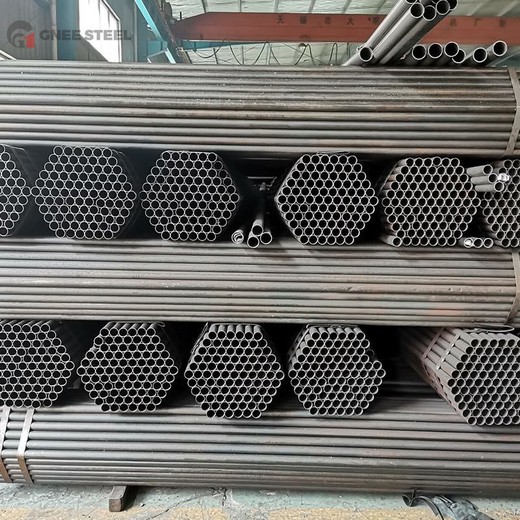
- Using petroleum cracking pipes to manufacture ring-shaped parts can improve material utilization, simplify the manufacturing process, save materials and processing time, such as rolling bearing rings, jack sets, etc., which are currently widely manufactured with steel pipes. Petroleum cracked tubes are also an indispensable material for various conventional weapons. Gun barrels, barrels, etc. are all made of petroleum cracked tubes. Petroleum cracking pipes can be divided into round pipes and special-shaped pipes according to their cross-sectional area shapes. Since the petroleum cracking steel pipe has the largest area when the circumferences are equal, more fluid can be transported with circular pipes.

- Manufacturing material
Seamless tubes for furnace tubes, heat exchanger tubes and piping in petroleum refineries. Commonly used are high-quality carbon steel (10#, 20#), alloy steel (12CrMo, 15CrMo), heat-resistant steel (12Cr2Mo, 15Cr5Mo), stainless steel (1Cr18Ni9, 1Cr18Ni9Ti). In addition to verifying the chemical composition and various mechanical properties of petroleum cracking steel pipes, it also needs to ensure water pressure, flattening, flaring and other tests, as well as surface quality and non-destructive testing. Steel pipes are delivered in heat treated condition. High-pressure pipes: hot-rolled and cold-rolled stainless steel pipes made of various stainless steels. They are widely used in petroleum and chemical equipment pipelines and stainless steel structural parts for various purposes. In addition to ensuring the chemical composition and mechanical properties, any steel pipe used to withstand fluid pressure It is necessary to ensure that the hydraulic pressure test is qualified.
- Precautions
During the use of petroleum cracking pipes, the hoses should be checked and cleaned frequently. If aging, cracking, blistering, scorching, and rat teeth are found, do not press or bend the gas hoses to avoid clogging; the connection between hoses, stoves, and pipes The interface should be firmly tied with a pipe clamp to prevent it from falling off and leaking; the hose cannot be used through walls, floors, doors, windows, cabinets, and ceilings.


