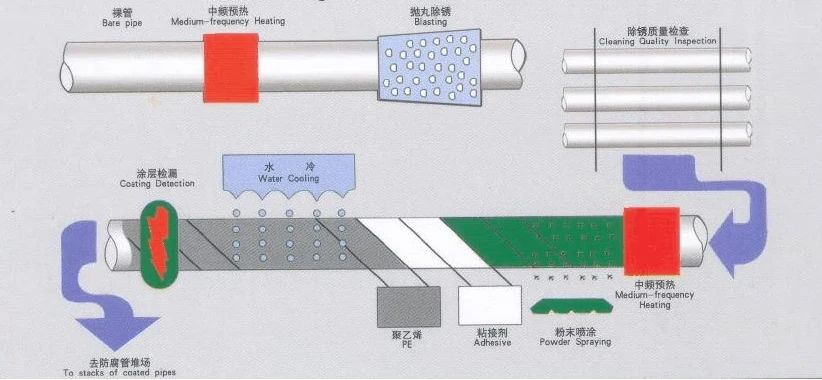
1 Preliminary preparation
All dirt, hazardous substances and contaminants, such as oil and grease, should be removed from the pipe prior to coating. All steel defects and irregularities shall be removed by grinding. Grinding of steel defects should not reduce the wall thickness below the specified minimum wall thickness of the pipe.
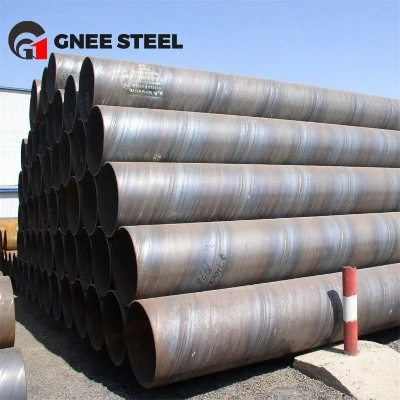
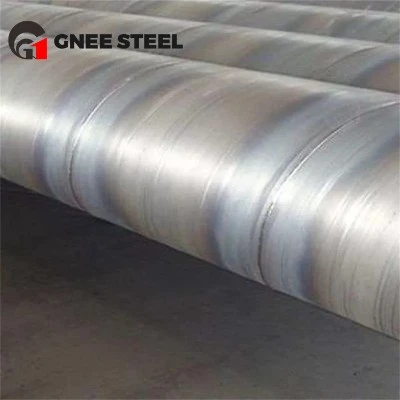
2 Sandblast Cleaning
In order to increase the adhesion of the coating on the pipe surface and prolong the service life of the paint film, we will carry out sand blasting and rust removal cleaning of the pipes. All pipes should be dry before entering the sandblasting cleaning device. The temperature of the pipes should be at least 3°C higher before sandblasting. The abrasive should be kept clean, dry and free of contaminants to avoid contamination of the substrate.
3 Epoxy Resin Application
After surface treatment, the surface to be coated shall not be exposed for a long period of time, otherwise it may lead to flash rust, which may damage the quality and adhesion of the coating. The thickness and degree of curing of the epoxy layer after curing should meet the relevant requirements.
4 Application of adhesive
The interval between epoxy coating and adhesive coating should be controlled. In addition, the adhesive material should meet the relevant requirements.
5 Polyethylene application
The application method shall be by lateral or crosshead extrusion. The applied coating shall be cooled to a temperature to prevent operational damage during finishing and final inspection.