


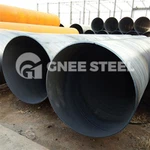


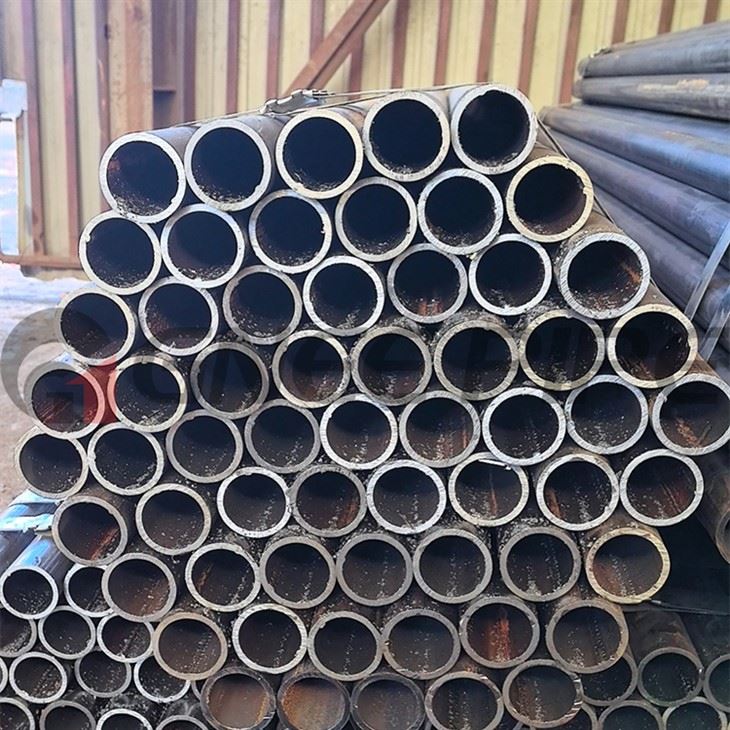

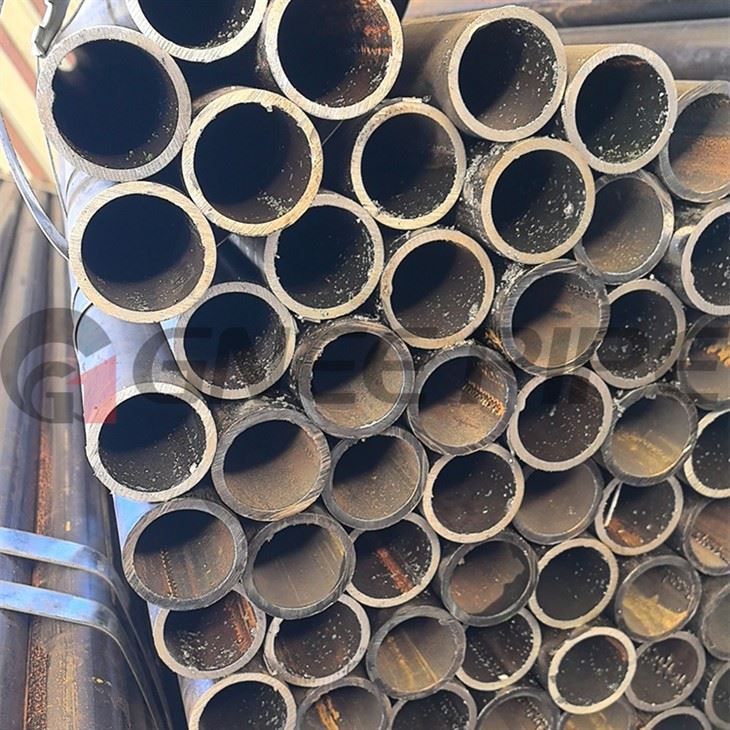
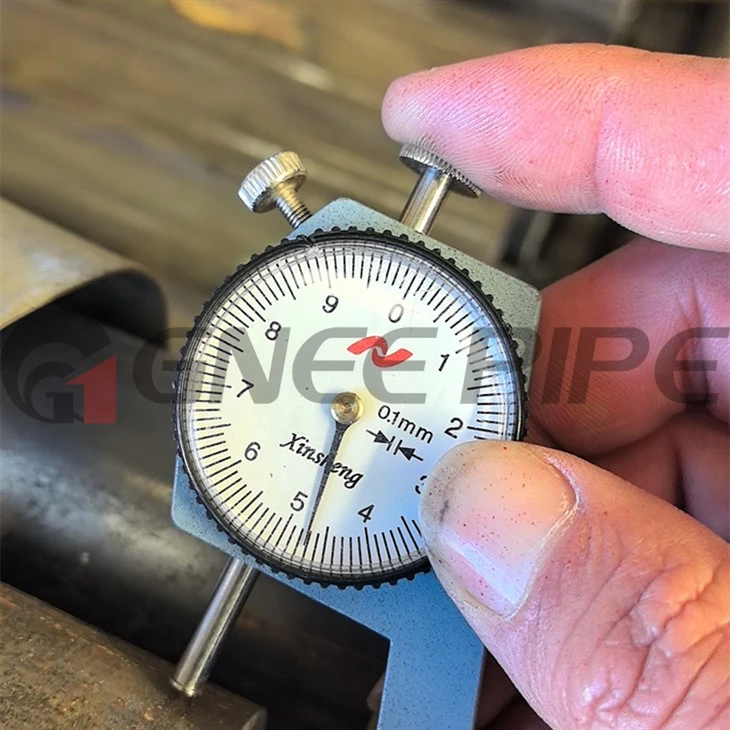
Ss400 ERW Welded Steel Tube
SS400 ERW Welded Steel Tube: Specifications, Mechanical Properties and Applications
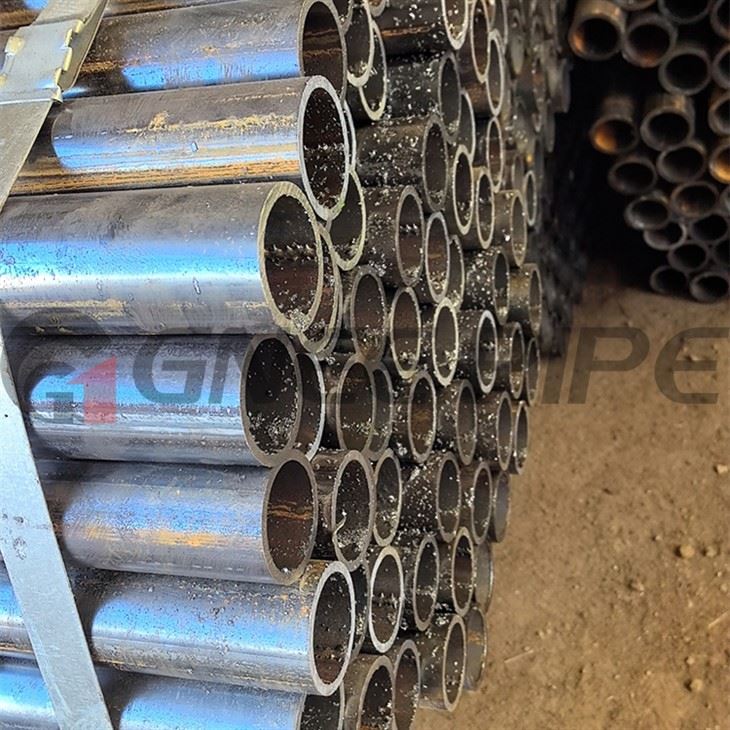
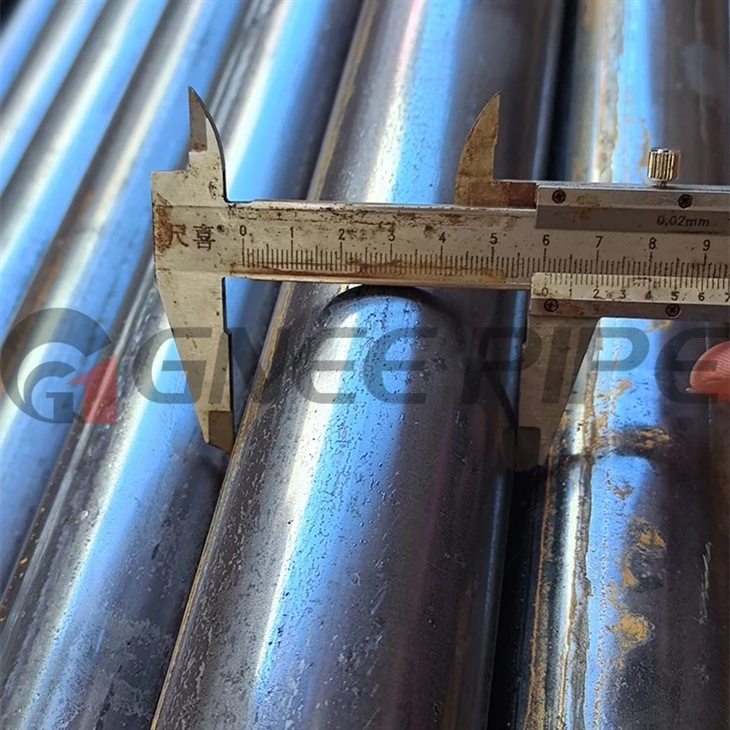
SS400 ERW Welded Steel Tube, that is, SS400 type resistance welded steel tube, is a steel product widely used in many fields. The following is a detailed introduction to its performance, characteristics and application fields:
SS400 is a steel grade specified in the Japanese JIS standard (Japanese Industrial Standard). SS400 is a structural carbon steel grade specified in JIS G3101. Unlike many ASTM steel grades, SS400 is primarily classified by its minimum mechanical properties rather than strict chemical composition limits. In addition, it also contains a small amount of impurity elements such as sulfur (S) and phosphorus (P).
SS400 steel has good plasticity, toughness and welding properties. The minimum yield strength varies with material thickness and is typically 245 MPa for thinner sections, the tensile strength is between 370-500 MPa (depending on the applicable JIS edition and product thickness), and the elongation is ≥26%. These performance indicators make SS400 steel have good stability and reliability when subjected to certain loads and impact forces.
SS400 ERW pipes are manufactured by high-frequency electric resistance welding (HFW/ERW), producing continuous longitudinal welds with excellent dimensional accuracy and high production efficiency.
SS400 ERW Welded Steel Tube is widely used in building structures, such as beams, columns, supports and other components of industrial plants, commercial buildings, residential buildings, etc. Its good toughness and weldability make it an ideal building material. In the field of machinery manufacturing, SS400 ERW Welded Steel Tube can be used to manufacture various parts of machinery and equipment, vehicles, ships, such as bases, brackets, etc. Its excellent processing performance and weldability make it an important material in these fields. In addition, SS400 ERW Welded Steel Tube can also be used to make pipes, containers, etc., and is widely used in petroleum, chemical, power and other industries.
| Standard | JIS G 3101 |
| Grade | SS400 |
| Material | Carbon steel pipe |
| Process | Seamless, LSAW, SSAW or ERW |
| Dimension | 13.7 mm – 3500 mm |
| Wall Thickness | 2 mm – 100 mm |
| Coating | Paint, anti-rust oil, galvanized, FBE, 3LPE, HDPE, etc |
| Use | General structures such as bridges, ships, rolling stocks, and other structures |
Chemical Composition
Per JIS G 3101:2010, the standard imposes mandatory limits on harmful impurity elements to guarantee weldability and toughness. Other alloying elements can be added at the mill's discretion to adjust strength and formability. The chemical requirements for SS400 are summarized below (mass fraction, %):
| Element | JIS G 3101 Mandatory Limit (Max) | Representative commercial chemistry |
|---|---|---|
| Carbon (C) | Not formally specified | ≤ 0.22% |
| Manganese (Mn) | Not formally specified | ≤ 1.40% |
| Silicon (Si) | Not formally specified | ≤ 0.35% |
| Phosphorus (P) | 0.050% | ≤ 0.040% |
| Sulfur (S) | 0.050% | ≤ 0.040% |
The low-carbon and low-impurity composition gives SS400 excellent weldability and cold forming performance, making it highly compatible with ERW pipe production and on-site fabrication operations.
Mechanical Properties
The mechanical properties of SS400 present an obvious thickness effect: as wall thickness increases, the minimum required yield strength decreases accordingly. The standard-specified room-temperature mechanical indicators are listed below:
| Grade | Minimum Yield Strength (MPa) by Wall Thickness | Tensile Strength (MPa) | Minimum Elongation (%) | |||
|---|---|---|---|---|---|---|
| ≤ 16 mm | >16 mm to 40 mm | >40 mm to 100 mm | >100 mm | |||
| SS400 | 245 | 235 | 215 | 205 | 400 – 510 | 17 – 21 (varies by thickness) |
Note: For the majority of commercial SS400 ERW tubes (wall thickness ≤ 16 mm), the guaranteed minimum yield strength is 245 MPa.
Equivalent Steel Grades by International Standards
SS400 has widely recognized equivalent grades in major global standard systems. For general structural applications, these grades are generally interchangeable upon engineering confirmation:
| Standard System | Equivalent Grade |
|---|---|
| Chinese GB | GB/T 700 Q235B |
| ASTM (USA) | ASTM A36 / A283 Grade D |
| EN (European) | EN 10025-2 S235JR |
| DIN (German) | St37-2 / RSt37-2 |
| ISO | ISO 630-2 SG250 |
Dimensions and Commercial Supply Range
SS400 ERW welded steel tubes are available in a broad size range to fit diverse structural design requirements. The standard commercial supply scope is as follows:
| Parameter | Standard Range |
|---|---|
| Outer Diameter (OD) | 21.3 mm – 660 mm (3/4 inch – 26 inch) |
| Wall Thickness (WT) | 2.0 mm – 20.0 mm |
| Standard Length | 6 m, 12 m, or custom cut lengths per project requirements |
Custom dimensions, surface treatments, and packaging are available.
ERW Manufacturing Process for SS400 Steel Tube
Electric Resistance Welding (ERW) is the dominant production technology for small and medium-diameter SS400 structural tubes. The main production flow is as follows:
Uncoiling and leveling: Hot-rolled SS400 steel coils are uncoiled, leveled and trimmed to the designed strip width.
Cold roll forming: The steel strip is gradually formed into a round tubular profile through a series of precision roller dies.
High-frequency welding: Heated by high-frequency current to a plastic state before forge welding under pressure.
Weld bead removal: External weld flash is normally removed, while internal flash removal is available depending on product specifications.
Sizing and straightening: The welded tube is calibrated to exact outer diameter tolerance and straightened for geometric accuracy.
Cutting and inspection: Cut to fixed lengths, followed by non-destructive testing, dimensional verification and final surface treatment.
Compared with submerged arc welded pipes, SS400 ERW tubes feature smoother inner and outer surfaces, tighter dimensional tolerances and higher production efficiency for small and medium diameter ranges.
Key Advantages of SS400 ERW Tube
Outstanding weldability: Low carbon composition enables compatibility with all conventional welding methods (arc welding, MIG/MAG, gas welding), with low cold cracking risk during fabrication.
Superior formability and machinability: Good plasticity and toughness support cold bending, cutting, drilling and punching processes without cracking or excessive deformation.
High dimensional precision: The ERW process delivers consistent outer diameter and wall thickness tolerance, ideal for prefabricated structural assemblies and modular construction.
High cost efficiency: As a standard commodity structural grade, SS400 has wide raw material availability and mature production technology, offering excellent economy for general structural projects.
Smooth surface finish: Uniform weld bead removal provides a clean, uniform surface, which facilitates subsequent painting, galvanizing and other coating processes.
Applications
SS400 ERW tubes are primarily intended for structural applications rather than pressure piping standards. Typical application scenarios include:
Construction engineering: Steel structure frames, building columns, roof trusses, scaffolding systems, fence posts and highway guardrails.
Infrastructure: Bridge auxiliary structures, traffic sign poles, power transmission towers and pipeline support brackets.
Machinery manufacturing: Equipment frames, conveyor supports, bearing housings and general mechanical structural components.
Automotive and transportation: Truck chassis frames, trailer structures and commercial vehicle body structural parts.
Shipbuilding: Secondary hull structures, interior support frames and deck outfitting components.
Available Surface Protection Treatments
To enhance corrosion resistance and extend service life, SS400 ERW tubes can be supplied with various surface treatment options:
Black bare (as-welded mill finish)
Anti-rust oil or clear varnish coating
Hot-dip galvanizing (HDG)
Shop primer or industrial paint coating
Fusion bonded epoxy (FBE) and 3LPE coating available for special pipeline or buried structural applications
SS400 ERW Tube in stock

Send us your requirements for a fast and competitive quotation.
FAQ:
Q1: Is SS400 ERW tube suitable for pressure piping applications?
No. SS400 is specified for general structural use under JIS G 3101, and is not designed or certified for pressure-bearing fluid transportation. For pressure pipeline projects, materials under dedicated pipe standards such as JIS G 3452 or API 5L should be selected. Always verify material suitability with a qualified professional engineer before use in pressure scenarios.
Q2: What are the main differences between SS400 and Q235B?
SS400 (JIS G 3101) and Q235B (GB/T 700) are both general-purpose mild structural steels with similar strength levels. The core differences are:
The JIS G 3101 standard formally only mandates upper limits for P and S, while GB/T 700 specifies clear ranges for C, Mn, Si, P and S.
SS400 has a minimum tensile strength of 400 MPa, slightly higher than the 375 MPa minimum of Q235B.
Q235B requires a room-temperature Charpy V-notch impact test, which is not a mandatory requirement for standard SS400.
They can be substituted for each other in most conventional structural projects, subject to project specification approval.
Q3: What is the difference between ERW and LSAW SS400 steel tubes?
The core distinction lies in the welding process and applicable size range:
ERW: High-frequency resistance welding without filler metal; applied to small and medium diameters (21.3–660 mm) with thin to medium walls; features high dimensional accuracy and smooth surface finish.
LSAW: Longitudinal submerged arc welding with filler wire and flux; applied to large diameters (355–1500 mm) with thick walls; delivers higher weld strength for heavy-load structural applications.
SS400 ERW tubes are more cost-effective for conventional light and medium structural load scenarios.
Q4: Does SS400 steel have good corrosion resistance?
No. SS400 is plain carbon steel with no inherent corrosion resistance. It will rust when exposed to humid, outdoor or chemically corrosive environments. For long-term outdoor service, hot-dip galvanizing, paint coating or other dedicated anti-corrosion treatments are strongly recommended to extend service life.
Q5: Can SS400 ERW tubes be cold bent on site?
Yes. Benefiting from good plasticity and low carbon content, SS400 ERW tubes have excellent cold forming performance and can be cold bent, flanged and expanded under proper process parameters. For thick-walled tubes, appropriate pre-heating is advised to avoid cracking at the bending zone.
Hot Tags: ss400 erw welded steel tube, China ss400 erw welded steel tube manufacturers, suppliers, SAWH steel pipes, ASTM A53 Straight Seam Welded Pipe, high frequency welded steel pipes, GB T700 2006, chromium molybdenum welded pipe, GB T1591 2009
You Might Also Like



Send Inquiry