


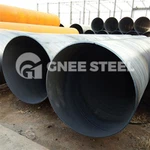


What Is The Difference Between ERW And EFW
Electric Resistance Welding (ERW) is a welding process used to join metal by using high-frequency electric current. This process involves passing a metal strip through a series of rollers to form a tube shape, after which an electric current is applied to the edges, heating them to a point where they are fused together.
Applications: ERW is predominantly used in the manufacturing of round, square, and rectangular tubing. It's widely applied in industries like automotive, general engineering, and in the production of furniture, scaffolding, and fence posts.
Advantages: The primary advantages of ERW include its speed, efficiency, and the production of minimal welding material waste.
Electric Fusion Welding (EFW) is a welding process that uses an electric arc to heat and melt the metal. Unlike ERW, EFW involves the melting of both the base metal and a filler material to form a joint.
Applications: EFW is mainly used in the chemical and petrochemical industries for welding pipes and tubes that require thick walls, which are often subjected to high pressure.
Advantages: EFW provides a strong joint that can withstand high pressure, making it suitable for thick-walled pipe applications.
Key Differences Between ERW and EFW
Welding Process: ERW uses electric resistance to heat and fuse the material, whereas EFW uses an electric arc.
Material Thickness: ERW is typically used for thinner materials, while EFW is suitable for thicker materials.
Applications: ERW is common in the automotive and construction industries, whereas EFW is used in high-pressure applications like chemical and petrochemical industries.
Weld Strength: EFW joints tend to be stronger, due to the melting of both the base metal and filler material.
Cost and Efficiency: ERW is generally more cost-effective and faster, making it suitable for large-scale production.
Hot Tags: what is the difference between erw and efw, China what is the difference between erw and efw manufacturers, suppliers, A358 EFW Pipe, Mechanical Tubing, ERW Carbon Steel Pipes, A519 Pipe, Alloy Mechanical Tube, SAW Pipe
You Might Also Like


Send Inquiry